Has it really been 14 years?
I hadn't even realized what day it was until I heard a brass quartet playing a slow-jam rendition of The Star-Spangled Banner as I rode by the McPherson Square metro station. Frankly, that's probably the extent of the Patriot Day observation I'll do. The morning bustle of one of the busiest courthouses in the United States didn't exactly lend itself to observing a moment of silence at 8:47 this morning.
Over the years, I've gone back and forth on how strongly I want to commemorate 9/11, waffling between "Support Our Troops!" platitudes and belligerent "America is the REAL aggressor!" college campus rhetoric. Now I fall somewhere in between.
Memorializing a terrorist attack is important, but we can't afford to think only about ourselves, even for one day. So reflecting about everything that has happened since those towers were knocked down, I'll simply acknowledge how privileged I am to exist in a society (and a body) where neither my physical safety nor my socioeconomic security have ever been put in serious danger. I recognize that many people, both at home and around the world, are denied that safety, while others choose to put themselves in harm's way to protect me.
What's more, I'm fortunate to have a job helping to safeguard access to justice and the rule of law. Institutions like courts protect societies from breaking down into overt violence, and (when we do our jobs right) give voice to the voiceless and do our part to ease structural violence.
Remember 9/11, but also remember that it's each of our duty to work toward a world where evil cannot take root in the soil of desperation.
--AWG
Friday, September 11, 2015

Thursday, August 27, 2015
I've been thinking a lot this week about Peggy Hubbard, after she posted a video rant against Black Lives Matter:
The points she makes, especially about so-called black on black crime, are ones that I've heard trotted out again and again, usually by white (but sometimes by black) conservatives, as an argument against a greater focus on police violence in America. Not to suggest she's being co-opted-- Ms. Hubbard is very sincere and I've no reason to think this isn't truly how she feels.
But I DO think she's missing the point of BLM. Protests and social change movements are not aimed at changing the behavior of communities, but at changing the behavior of a government or other power structure-- others have made this point much more eloquently than I could. Do yourself a favor and go read their stuff.
There's another theme underlying her rant, though, and it's one I feel the need to address- that black people are protesting police violence while being, in her view, overly violent and unruly themselves. As if that makes black people unworthy of equal protection under the law.
But the right to life is not contingent upon good citizenship or good behavior. As a species, we recognize that there is such a thing as inherent human dignity; that each human life is worthy of protection and advocacy without regard to how, exactly, that life is lived or how sympathetic a figure someone is.
Most importantly, we realize that individual lives cannot be extinguished without due process of law.
The field of human rights exists because of that ethic, and it's one that I stand behind. But it's being violated again and again on the streets and in the homes of this country. I have nothing but respect for Peggy Hubbard and the obviously raw emotional reaction she displays. But the notion that an entire community of people is somehow unworthy of equal treatment is a dangerous one-- the "lesser" status white colonials afforded to Africans formed the basis for slavery in the first place, and and that's led us directly to where we are today.
A person's life must be worthy of protection regardless of their conduct, or we've made no progress at all and "human rights" are simply imaginary.
To those who have countered that "ALL lives matter," that's true, but it misses the point. "Black Lives Matter" is not an attempt to make a life contained within skin of a certain color matter more than a life contained within skin of another color. Instead it's both a recognition and a call to action. A recognition of the injustice inherent to a system in which the deepest and most essential of human rights, the right to live and be free from bondage, is denied to our black American brothers and sisters. Where, for too long, black lives have mattered *less* than other lives in a very real way.
A call to action that cuts through all of our self-congratulatory rhetoric about the victories of the Civil Rights Era and the advent of a "post-racial America." To make those of us who have benefited from that system, the "privileged" like me, wake up to that injustice and work to mitigate it.
Reasonable people can and do disagree about the tactics of BLM, or wonder (as I do) how to be an ally when the movement seems so bent on confrontation as a raison d'etre.
But when Peggy Hubbard says "white people don't care," that's an indictment of white people, probably more than she even realizes. White people, we cannot allow those words to be true.
If we care anything about human rights, BLM's goals must be our goals.
--AWG
I've been worrying that my time here's a little unclear...
The points she makes, especially about so-called black on black crime, are ones that I've heard trotted out again and again, usually by white (but sometimes by black) conservatives, as an argument against a greater focus on police violence in America. Not to suggest she's being co-opted-- Ms. Hubbard is very sincere and I've no reason to think this isn't truly how she feels.
But I DO think she's missing the point of BLM. Protests and social change movements are not aimed at changing the behavior of communities, but at changing the behavior of a government or other power structure-- others have made this point much more eloquently than I could. Do yourself a favor and go read their stuff.
There's another theme underlying her rant, though, and it's one I feel the need to address- that black people are protesting police violence while being, in her view, overly violent and unruly themselves. As if that makes black people unworthy of equal protection under the law.
But the right to life is not contingent upon good citizenship or good behavior. As a species, we recognize that there is such a thing as inherent human dignity; that each human life is worthy of protection and advocacy without regard to how, exactly, that life is lived or how sympathetic a figure someone is.
Most importantly, we realize that individual lives cannot be extinguished without due process of law.
The field of human rights exists because of that ethic, and it's one that I stand behind. But it's being violated again and again on the streets and in the homes of this country. I have nothing but respect for Peggy Hubbard and the obviously raw emotional reaction she displays. But the notion that an entire community of people is somehow unworthy of equal treatment is a dangerous one-- the "lesser" status white colonials afforded to Africans formed the basis for slavery in the first place, and and that's led us directly to where we are today.
A person's life must be worthy of protection regardless of their conduct, or we've made no progress at all and "human rights" are simply imaginary.
To those who have countered that "ALL lives matter," that's true, but it misses the point. "Black Lives Matter" is not an attempt to make a life contained within skin of a certain color matter more than a life contained within skin of another color. Instead it's both a recognition and a call to action. A recognition of the injustice inherent to a system in which the deepest and most essential of human rights, the right to live and be free from bondage, is denied to our black American brothers and sisters. Where, for too long, black lives have mattered *less* than other lives in a very real way.
A call to action that cuts through all of our self-congratulatory rhetoric about the victories of the Civil Rights Era and the advent of a "post-racial America." To make those of us who have benefited from that system, the "privileged" like me, wake up to that injustice and work to mitigate it.
Reasonable people can and do disagree about the tactics of BLM, or wonder (as I do) how to be an ally when the movement seems so bent on confrontation as a raison d'etre.
But when Peggy Hubbard says "white people don't care," that's an indictment of white people, probably more than she even realizes. White people, we cannot allow those words to be true.
If we care anything about human rights, BLM's goals must be our goals.
--AWG
I've been worrying that my time here's a little unclear...
Tuesday, August 25, 2015
I had to return a library book today before I was done reading it.
Oh, I tried to renew it, but the website told me "This item has holds", meaning of course that someone else wants the book so I can't renew it.
How frustrating is that, right?!
"Oh, just read faster/more, Adam," you say, "other people need books too."
Well, I would have, except the book was Master and Commander (yes, the one they made the movie about,) and I had to look up every third word until I finally learned the difference between a mizzen yardarm and a main topgallant.
And now I'll never know how Jack Aubrey and Stephen Maturin became such good friends. I hope you're happy, random person who put a hold on my book.
People really need to be more accommodating of my needs.
Oh, I tried to renew it, but the website told me "This item has holds", meaning of course that someone else wants the book so I can't renew it.
How frustrating is that, right?!
"Oh, just read faster/more, Adam," you say, "other people need books too."
Well, I would have, except the book was Master and Commander (yes, the one they made the movie about,) and I had to look up every third word until I finally learned the difference between a mizzen yardarm and a main topgallant.
And now I'll never know how Jack Aubrey and Stephen Maturin became such good friends. I hope you're happy, random person who put a hold on my book.
People really need to be more accommodating of my needs.
Wednesday, July 15, 2015
To Kill Our Childhoods?
Early reviews of "Go Set a Watchman," the much-anticipated sequel to Harper Lee's "To Kill a Mockingbird," are out, and the news... is not great.
Criticism of the novel has coalesced around two main points: one, it's not written terribly well. That makes sense perfect sense, because while it takes place 20 years after "Mockingbird", Lee wrote "Watchman" some years prior, when she had less experience. Her publishers basically told her "well this is all right, but it'd be better if you did it this way..." hence "Mockingbird". In essence, it's a rough draft that got made into a full sequel.*
The second criticism of the novel intrigues me far more. So 20 years have passed since Scout Finch watched her lawyer dad defend Tom Robinson, a black man facing charges of raping a white woman, in the segregated South. Since that time, Atticus has gone to a Klan meeting or two, and supports segregation.
Naturally, there are folks saying "but Harper, HOW could you make Atticus Finch a RACIST??? He's like... such a nice guy! You've ruined my childhood!"
Really, though?
I think it's time I dusted off my Valyrian Steel Greatsword of Unassailable Truth.

You can't criticize something merely because you didn't like it. It's like, the second rule of critical analysis. You're free to think less of Atticus Finch now that he's done some unpalatable things. But that doesn't mean that the book is bad. If it's bad, it's bad for other reasons. I'm sure lots of qualified people are going to pick apart the social and political significance of whether or not Atticus Finch gives in to hatred later in life. Let 'em. I think that misses the point.
To me, the relevant issue in Mockingbird was never how Atticus Finch feels about black people in general, though his serene demeanor and overall sense of justice suggest that he bears them no specific ill will. But the real proof of his character is that he believes in the rule of law, and believes that a black man deserves equal protection under the law while many of his peers don't.
When the judge approaches Atticus about the case, it's clear from the conversation that they're both aware of the systemic (as well as overt) discrimination Tom Robinson is likely to face. No one else will take the case, and the jury's not likely to be kind or even fair. Atticus believes, to paraphrase John Adams, that no accused person should lack legal counsel in a free country, and so he agrees to represent Robinson to help him get a fair shot. He even goes so far as to defend Robinson against a lynch mob (with Scout's help) but he does that out of dedication not to the man, but to due process of law. Whatever his personal feelings on race, Atticus Finch knows that mob justice is no justice at all. He knows that the legal system in which he operates is inherently unfair, and feels committed to correcting that injustice in whatever small way he can.
Fast forward 60 years, to a time when symbols and actions born of overt racism are no longer seen as acceptable, but systemic racism and inequity are as strong as ever.** White people can feel more and more comfortable that we are not racists, because we bear no specific ill will to non-whites and don't use racial slurs in conversation. We are ignorant of the fact that we benefit greatly from systemic oppression. When someone points out that our tacit support for a racist system is equally as bad as, say, using the n-word, we freak out like we're being personally attacked. At that point, we tend to shut the conversation down.***
We all like to pretend we're Atticus Finch, doing as best we can for ourselves and our loved ones, with no specific malice for anyone. But we (for the most part) don't fight against the system that oppresses and destroys our fellow Americans for the crime of not having white skin. In reality we're the Maycomb jury, struggling with the decision of whether (and how hard) to fight back against a stacked deck that, to be honest, has worked out pretty well for us.
It's hard to see a paragon like Atticus Finch tarnished. But good people grow old, grow bitter, become distressed by the changes around them and the feeling that the world no longer plays by the rules that they understood to be inviolable. Ultimately, though, that's not what's important about his character. Even if Atticus Finch resents black people by the time "Watchman" takes place, the fact remains that he once took on the Herculean task of teaching a whole town an important lesson about justice (to mixed success.) He worked from within an oppressive system to fight back, in some way, against oppression.
THAT is the example we should be celebrating and attempting to emulate.
---AWG
*I haven't read the book, and honestly, I probably won't. I get this ooky feeling that Lee was coerced into publishing it, to satisfy our sequel-obsessed culture of media consumption. So there's an outside chance that I'm downplaying the...downfall... of the Atticus Finch character.
**And all the more insidious because they're subliminal, and we do our best not to refer to them. The more social privilege you enjoy, the harder it is to detect systemic bias unless someone points it out to you. Even then, you're likely at first to react defensively and attempt to shut down the dialogue.
***Check out John Metta's excellent piece "I, Racist" and Doug Muder's "The Distress of the Privileged" for a better understanding of the "I'm not a racist, stop playing the race card!" dynamic.
Criticism of the novel has coalesced around two main points: one, it's not written terribly well. That makes sense perfect sense, because while it takes place 20 years after "Mockingbird", Lee wrote "Watchman" some years prior, when she had less experience. Her publishers basically told her "well this is all right, but it'd be better if you did it this way..." hence "Mockingbird". In essence, it's a rough draft that got made into a full sequel.*
The second criticism of the novel intrigues me far more. So 20 years have passed since Scout Finch watched her lawyer dad defend Tom Robinson, a black man facing charges of raping a white woman, in the segregated South. Since that time, Atticus has gone to a Klan meeting or two, and supports segregation.
Naturally, there are folks saying "but Harper, HOW could you make Atticus Finch a RACIST??? He's like... such a nice guy! You've ruined my childhood!"
Really, though?
I think it's time I dusted off my Valyrian Steel Greatsword of Unassailable Truth.
You can't criticize something merely because you didn't like it. It's like, the second rule of critical analysis. You're free to think less of Atticus Finch now that he's done some unpalatable things. But that doesn't mean that the book is bad. If it's bad, it's bad for other reasons. I'm sure lots of qualified people are going to pick apart the social and political significance of whether or not Atticus Finch gives in to hatred later in life. Let 'em. I think that misses the point.
To me, the relevant issue in Mockingbird was never how Atticus Finch feels about black people in general, though his serene demeanor and overall sense of justice suggest that he bears them no specific ill will. But the real proof of his character is that he believes in the rule of law, and believes that a black man deserves equal protection under the law while many of his peers don't.
When the judge approaches Atticus about the case, it's clear from the conversation that they're both aware of the systemic (as well as overt) discrimination Tom Robinson is likely to face. No one else will take the case, and the jury's not likely to be kind or even fair. Atticus believes, to paraphrase John Adams, that no accused person should lack legal counsel in a free country, and so he agrees to represent Robinson to help him get a fair shot. He even goes so far as to defend Robinson against a lynch mob (with Scout's help) but he does that out of dedication not to the man, but to due process of law. Whatever his personal feelings on race, Atticus Finch knows that mob justice is no justice at all. He knows that the legal system in which he operates is inherently unfair, and feels committed to correcting that injustice in whatever small way he can.
Fast forward 60 years, to a time when symbols and actions born of overt racism are no longer seen as acceptable, but systemic racism and inequity are as strong as ever.** White people can feel more and more comfortable that we are not racists, because we bear no specific ill will to non-whites and don't use racial slurs in conversation. We are ignorant of the fact that we benefit greatly from systemic oppression. When someone points out that our tacit support for a racist system is equally as bad as, say, using the n-word, we freak out like we're being personally attacked. At that point, we tend to shut the conversation down.***
We all like to pretend we're Atticus Finch, doing as best we can for ourselves and our loved ones, with no specific malice for anyone. But we (for the most part) don't fight against the system that oppresses and destroys our fellow Americans for the crime of not having white skin. In reality we're the Maycomb jury, struggling with the decision of whether (and how hard) to fight back against a stacked deck that, to be honest, has worked out pretty well for us.
It's hard to see a paragon like Atticus Finch tarnished. But good people grow old, grow bitter, become distressed by the changes around them and the feeling that the world no longer plays by the rules that they understood to be inviolable. Ultimately, though, that's not what's important about his character. Even if Atticus Finch resents black people by the time "Watchman" takes place, the fact remains that he once took on the Herculean task of teaching a whole town an important lesson about justice (to mixed success.) He worked from within an oppressive system to fight back, in some way, against oppression.
THAT is the example we should be celebrating and attempting to emulate.
---AWG
*I haven't read the book, and honestly, I probably won't. I get this ooky feeling that Lee was coerced into publishing it, to satisfy our sequel-obsessed culture of media consumption. So there's an outside chance that I'm downplaying the...downfall... of the Atticus Finch character.
**And all the more insidious because they're subliminal, and we do our best not to refer to them. The more social privilege you enjoy, the harder it is to detect systemic bias unless someone points it out to you. Even then, you're likely at first to react defensively and attempt to shut down the dialogue.
***Check out John Metta's excellent piece "I, Racist" and Doug Muder's "The Distress of the Privileged" for a better understanding of the "I'm not a racist, stop playing the race card!" dynamic.
Thursday, June 25, 2015
The Spirit of the Law
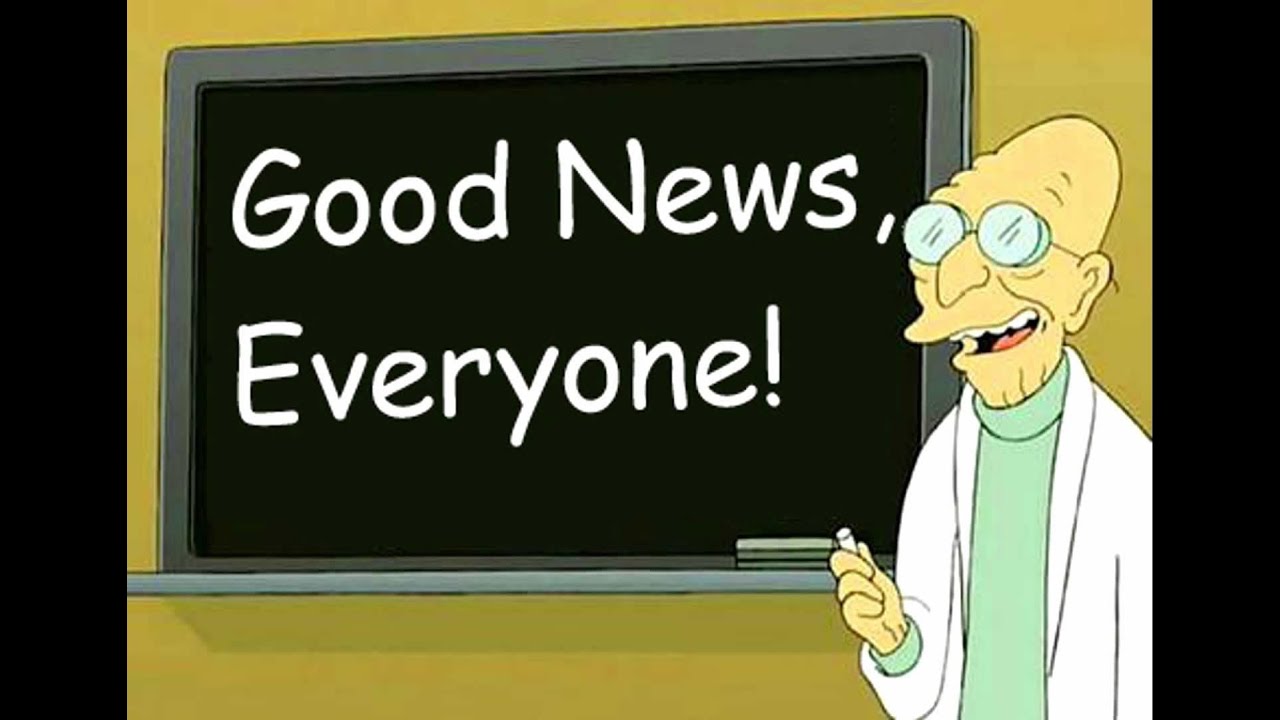 |
| Professor Farnsworth gets to keep his health insurance. (c) Matt Groening |
The Supreme Court just ruled, 6-3, that the King v Burwell challenge to the Affordable Care Act (Obamacare) was a stupid challenge foisted on the Court by stupid idiot-faces.
I believe those exact words were in the majority opinion. Check SCOTUSBlog.
For any who haven't been following along, King hinged on the legality of providing subsidies to residents of states who hadn't set up their own health exchanges (basically those websites that give people the ability to purchase subsidized health insurance), a key pillar of Obamacare. If state governments refused to set exchanges up for political reasons or whatever, the law allowed the federal government to do it for them and provide subsidies directly to the buyers.
OR DID IT?
Yes, it did. There was a quirk in the wording of the exchange provision, which the plaintiff's lawyers used to argue that only states had the power to develop exchanges and provide subsidies, and if they declined, the federal government, which is not a state, could not do it for them.
Yes, really.
There's a philosophical discussion to be had about the letter of the law vs. the spirit of the law, but I'm not the most qualified to lead it.
If the Supreme Court had agreed, though, millions of people would have lost the subsidies that make health insurance affordable for their them and their families.
But what is a state, really? To a student of international affairs, the "state does not mean federal government" argument was ridiculous on its face. When Americans think about states, we mean a specific, sub-national, legal and political entity with some degree of autonomy, but subject to the authority of the national government. Much like what other countries might call a provincial government. In the wider world, a "state" is just an entity, it just means the government body or institution relevant to whatever we happen to be talking about. "State security forces," for example, could be municipal police or the army. There is a national Secretary of State, and there are state Secretaries of State. Sensing a pattern here?
In that sense, the federal government is a state just as much as a "state" government. Of course it can set up health insurance exchanges under the ACA. It makes no sense or the federal government to pass a law in which it forbids itself from taking the necessary action to implement that law. No sense at all.
Now, the authors of the law may or may not have had my definition of "state" in mind when they wrote it, it'll be interesting to see if the majority opinion uses any of the same logic I did.
***UPDATE: They did not. Chief Justice Roberts' opinion focused mainly on the how completely absurd it would have been for Congress to design a law with the disastrous outcomes a King victory would have led to. Which was probably the right way to look at it. Justice Scalia, however, illustrated my point very well in his dissent, claiming precisely that "saying that an exchange established by the Federal Government is 'established by the State'..." renders all words meaningless. Heh. What a card.***
Either way, there are two peculiarly (and depressingly) American idiosyncrasies that this kerfuffle brought up.
First, there's our veneration of "states rights," the idea that American state governments are constantly defending against encroachments by that Kenyan/Arab/Socialist/Muslim/Fascist/Dictator in the White House. People like David King, or at least his lawyers, buy in. So it goes down like this:
White House: "Hey guys, we have this law now that's gonna help people. But you're gonna need to do some things to make it work."
State House: "The federal government MAKING us help people? No way! That's tyranny. Quit doing tyranny to us."
WH: "It's not-- sigh, fine. I'll just set it up for you."
SH: "Whatever. Sure. Now leave us alone. We'll call you when we need disaster relief, or to buy some tanks for our cops."
WH: "Deal."
David King: "OH HELL NO!"
I'm sure David King has his reasons for not wanting to buy health insurance, and it's hard to convince someone of something that seems to be so obviously in their best interest. But his lawyers took his desire to opt-out and hijacked it into yet another national argument on the legitimacy of Obamacare.
I think they took advantage of him to try and make a political point, and I think that's sad. Which brings me to the second American idiosyncrasy: the constant veneration of soldiers and the military in our culture, juxtaposed against the reality that an actual. Vietnam. veteran. like King somehow ended up in a situation where his health care wasn't all paid for anyway.
The cognitive dissonance there would be delicious if it wasn't so infuriating.
--AWG
Friday, June 5, 2015
I just updated a post from February, where I apparently gave Jeb Bush short shrift on shenanigans. Here's why.
Thursday, June 4, 2015
You want to make an omelette, you've gotta break a few nest eggs.
If you know me, you know I LOVE repetition.
Just kidding. I hate it. Jargon, catchphrases, buzzwords, throw 'em all in the trash!
I'm also not much for predictions, but I'm gonna go ahead and make one: "Nest egg" is going to be the most overused buzzword of the millennial generation. And, at age 30, I'm already sick of hearing it.
I'm basing the prediction on several things. First, my generation came of age during the Great Recession, so we're keenly aware of how fragile our economic system is, and how a few quarters of especially poor job numbers can mess things up for YEARS.
Second, we've been conditioned not to trust in the financial fail-safes that previous generations have been able to rely on, at least in part. Social Security and Medicare are more and more burdened, and there are serious questions about whether they will even be solvent by the time millennials reach retirement age (or, indeed, whether retirement will even exist in the way we currently think of it). Pensions are on their way out. So it's increasingly on us to provide for our own twilight years.
Finally, our increasingly interconnected and complex financial system has made it more important for the average person to have a higher degree of financial literacy, and it's something we're not particularly great at .* To fill that gap, online financial services like Mint (which I use), LearnVest (which I do not), and a host of others have cropped up to try and make us entitled kids finally learn something, dammit.
And therein lies the crux of why I consider myself a terrible millennial, or at least a highly atypical one.** We're supposed to love everything web 2.0, and there's nothing web 2.0 loves more than buzzwords. The mere existence of hashtags (which I do actually kinda enjoy, because I get to use them ironically) is proof enough. I get e-mails daily e-mails from the one time I tried signing up for LearnVest, and in a 450-word message they might say "nest egg" about 6 times. And they're not the only offender.
I get it, OK? It's all about branding, and the more you can associate a common phrase with your product in my mind, the better you're going to do. But by the third time I see that detestable phrase, I'm ready to close the e-mail and forget all about your stupid brand.
So can we just find a new word for it, or better yet a series of them to rotate through? Or, and I know I'm reaching here, just call them... retirement accounts? Savings?
It just seems like using a descriptive term would support financial literacy more than a cutesy bird metaphor.
Then again, I suppose the bird is the word.***
--AWG
...and we embrace in the baggage claim
*I'm not a self-hating millennial, and I generally think journalists need to get off our backs already. Far from joining in the millennial-bashing, I'd argue that American culture at large does not lend itself to saving or financial literacy, and it's not a problem peculiar to my generation. But poor financial literacy is potentially much more damaging now than at any time in the past, since your credit score determines, like, your entire destiny.
**For example, I started working full time more or less immediately after graduating college, at jobs that did not change the world or encourage me to be creative. Upon moving to a new city, I took "the safe job" and am still there six years later. I started a modest retirement account at like, 23. I've never tried to monetize a hobby, nor have I felt particularly passionate about any one side project other than cycling (which is...on hold). While I do get a certain fulfillment from my work, I don't feel a strong personal connection to it, as though it were my life's mission or something. I would never classify myself as a "content creator"-- to the contrary, I'm starting to suspect I might actually be terrible at social media and the internet in general.
***I did not start this post with the intention of bookending it with Family Guy videos. It just kinda happened.
Just kidding. I hate it. Jargon, catchphrases, buzzwords, throw 'em all in the trash!
I'm also not much for predictions, but I'm gonna go ahead and make one: "Nest egg" is going to be the most overused buzzword of the millennial generation. And, at age 30, I'm already sick of hearing it.
I'm basing the prediction on several things. First, my generation came of age during the Great Recession, so we're keenly aware of how fragile our economic system is, and how a few quarters of especially poor job numbers can mess things up for YEARS.
Second, we've been conditioned not to trust in the financial fail-safes that previous generations have been able to rely on, at least in part. Social Security and Medicare are more and more burdened, and there are serious questions about whether they will even be solvent by the time millennials reach retirement age (or, indeed, whether retirement will even exist in the way we currently think of it). Pensions are on their way out. So it's increasingly on us to provide for our own twilight years.
Finally, our increasingly interconnected and complex financial system has made it more important for the average person to have a higher degree of financial literacy, and it's something we're not particularly great at .* To fill that gap, online financial services like Mint (which I use), LearnVest (which I do not), and a host of others have cropped up to try and make us entitled kids finally learn something, dammit.
And therein lies the crux of why I consider myself a terrible millennial, or at least a highly atypical one.** We're supposed to love everything web 2.0, and there's nothing web 2.0 loves more than buzzwords. The mere existence of hashtags (which I do actually kinda enjoy, because I get to use them ironically) is proof enough. I get e-mails daily e-mails from the one time I tried signing up for LearnVest, and in a 450-word message they might say "nest egg" about 6 times. And they're not the only offender.
I get it, OK? It's all about branding, and the more you can associate a common phrase with your product in my mind, the better you're going to do. But by the third time I see that detestable phrase, I'm ready to close the e-mail and forget all about your stupid brand.
So can we just find a new word for it, or better yet a series of them to rotate through? Or, and I know I'm reaching here, just call them... retirement accounts? Savings?
It just seems like using a descriptive term would support financial literacy more than a cutesy bird metaphor.
Then again, I suppose the bird is the word.***
--AWG
...and we embrace in the baggage claim
*I'm not a self-hating millennial, and I generally think journalists need to get off our backs already. Far from joining in the millennial-bashing, I'd argue that American culture at large does not lend itself to saving or financial literacy, and it's not a problem peculiar to my generation. But poor financial literacy is potentially much more damaging now than at any time in the past, since your credit score determines, like, your entire destiny.
**For example, I started working full time more or less immediately after graduating college, at jobs that did not change the world or encourage me to be creative. Upon moving to a new city, I took "the safe job" and am still there six years later. I started a modest retirement account at like, 23. I've never tried to monetize a hobby, nor have I felt particularly passionate about any one side project other than cycling (which is...on hold). While I do get a certain fulfillment from my work, I don't feel a strong personal connection to it, as though it were my life's mission or something. I would never classify myself as a "content creator"-- to the contrary, I'm starting to suspect I might actually be terrible at social media and the internet in general.
***I did not start this post with the intention of bookending it with Family Guy videos. It just kinda happened.
Subscribe to:
Comments (Atom)